


 Users Today : 15
 Users Yesterday : 197
 This Month : 1994
 This Year : 1994
 Total Users : 6913
 Views Today : 63
 Total views : 24780
 Who's Online : 1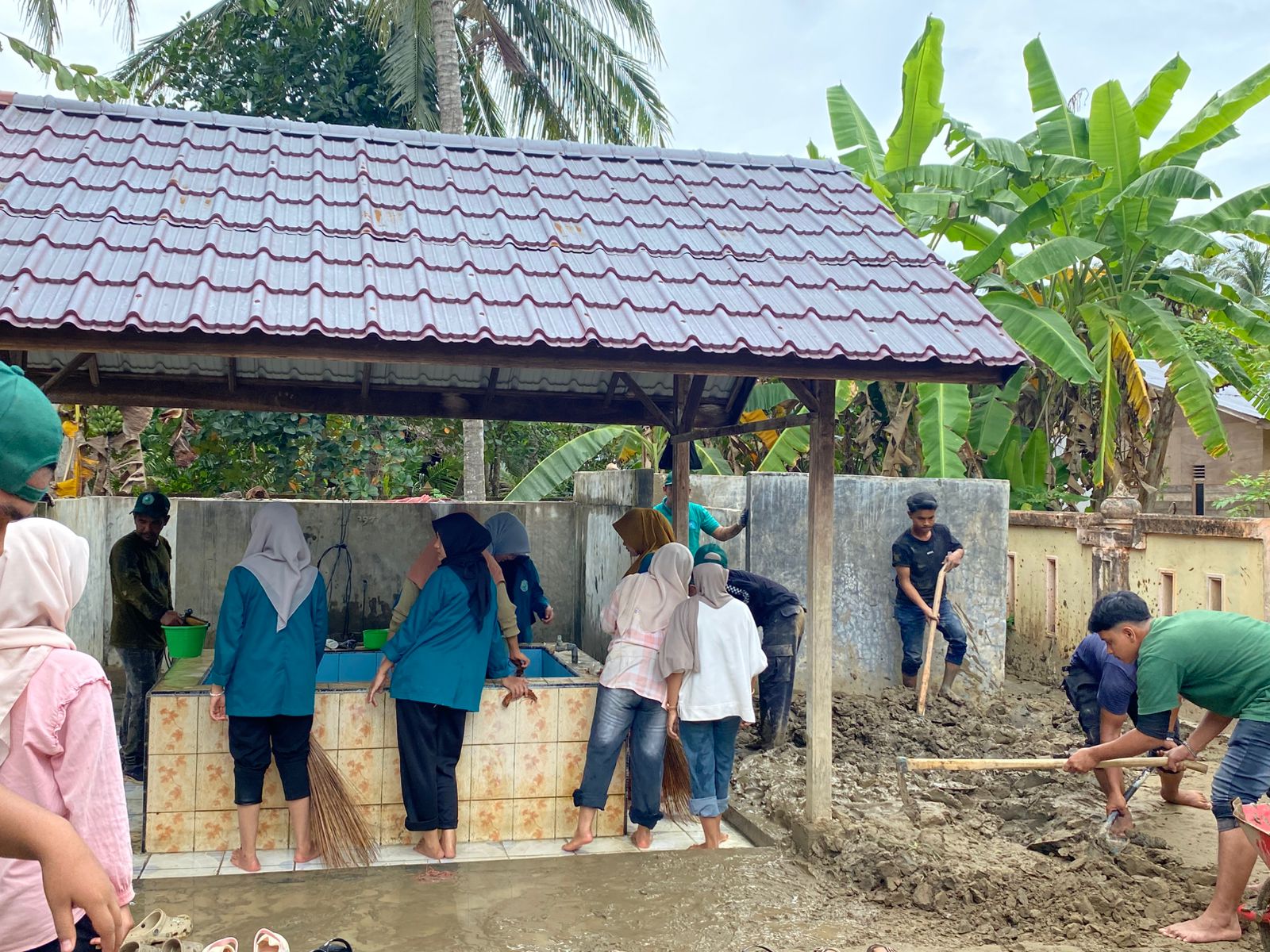
The Role of Student Leadership at Universitas Islam Kebangsaan Indonesia (UNIKI) in the Restoration of Religious and Social Facilities through Community Service Activities in the Aftermath of Flash Flood Disasters in Bireuen Regency.
Moreover, on November 26, 2025, flash floods struck several areas in Aceh and Sumatra, including Bireuen Regency, resulting in damage to public facilities, community residences, houses of worship, and village government infrastructure.
The disaster not only caused physical damage but also generated social and psychological impacts on the affected communities. Mud inundated meunasah, community residences, balai pengajian (religious study halls), keuchik (village head) offices, and mosques.
Furthermore, the condition of the meunasah severely disrupted religious activities, non-formal education, and public services. Therefore, the involvement of various stakeholders, including higher education institutions, is essential in post-disaster recovery efforts.
As a higher education institution committed to the Tri Dharma Perguruan Tinggi, Universitas Islam Kebangsaan Indonesia (UNIKI) Bireuen has taken an active role in post-disaster community service activities.
The involvement of students, led directly by the Student President and Vice President along with the student body, represents a tangible contribution of the younger generation in assisting the community and strengthening the values of mutual cooperation and social solidarity.
The results of the activities indicate that student involvement not only contributed to accelerating physical recovery in the post-disaster period but also strengthened social solidarity, humanitarian concern, and the strategic role of higher education institutions as agents of change within society.
Furthermore, community service is one of the main pillars of the Tri Dharma Perguruan Tinggi, alongside education and research. In the context of disaster management, higher education institutions play a strategic role as centers for education, mitigation, and the implementation of humanitarian actions.
According to the concept of participatory development, student involvement in social activities is capable of fostering positive change within communities while simultaneously shaping leadership character, empathy, and social responsibility.
Gotong royong, as a local value of the Indonesian nation, also serves as an important foundation in disaster response and recovery. Voluntary collective action has proven effective in accelerating environmental restoration while strengthening social cohesion within affected communities.
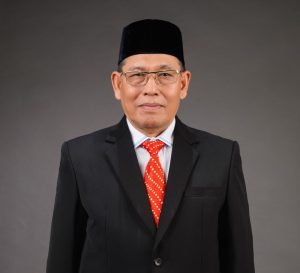
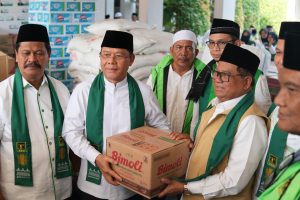
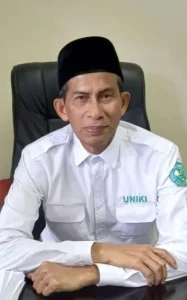
The Rector of Universitas Islam Kebangsaan Indonesia (UNIKI) Bireuen, Dr. Zainuddin Iba, S.E., M.M., expressed strong support for the cleanup activities of community residences, houses of worship, religious study centers, meunasah, and mosques following the floods and mud disasters in Aceh and Sumatra, particularly in Bireuen Regency. He emphasized that these activities are part of community mental rehabilitation and trauma recovery efforts in response to the challenges faced by affected residents.
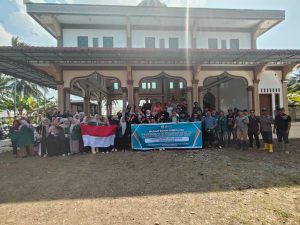
The writing of this article is part of a community service activity conducted by Universitas Islam Kebangsaan Indonesia (UNIKI) Bireuen. The activity took place on Tuesday, December 30, 2025, in Imbudee Village, Kuta Blang Subdistrict, Bireuen Regency, Aceh Province.
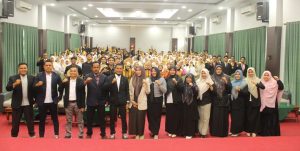
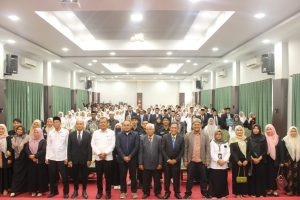
Furthermore, the implementation of this activity was coordinated by the Vice Rector III of UNIKI Bireuen, Dr. Kamaruddin, M.M., who served as the Chair of the UNIKI Disaster Care Committee. The participants included students, lecturers, educational staff (tendik), employees, deans, and other institutional elements within the UNIKI Bireuen community.
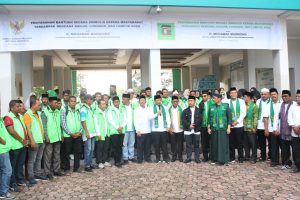
This activity represented student participation in post-disaster action, in which UNIKI Bireuen students, led by the Student President, Ms. Putri Zianby Cintami, S.E., and the Student Vice President, Ms. Melly Sukma Fitri, along with a total of 75 students, were directly deployed to locations affected by the flash floods.
Furthermore, the activities included mutual cooperation (gotong royong) and educational engagement with the community. The presence of student organization leaders in this initiative demonstrated participatory leadership and the students’ commitment to fulfilling their social roles.
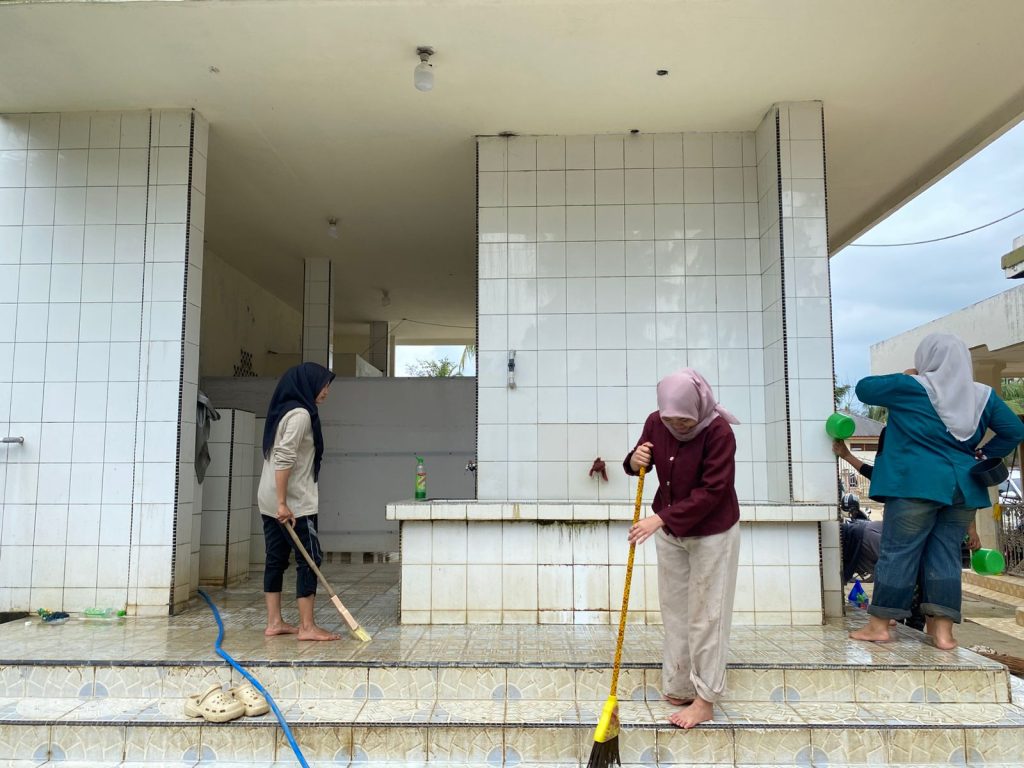
The students actively cleaned the mud deposits inside the meunasah, religious study halls (balai pengajian), and the keuchik (village head) office of Imbudee Village. This activity aimed to restore the functions of public and social facilities so that they could be used again by the community.

The cleanup activities were carried out manually using simple work tools, such as hoes, broomsticks, shovels, and wheeled carts. The use of these basic tools reflected the participants’ spirit of hard work and voluntarism in assisting the community without relying on heavy machinery.
Although simple in nature, the collective efforts carried out continuously proved effective in reducing the impact of post-flood mud. This demonstrates that the primary strength in disaster recovery lies not only in technology but also in human solidarity and cooperation.
The role of university leadership and the academic community was crucial to the success of this activity. This achievement was inseparable from the full support of the leadership of Universitas Islam Kebangsaan Indonesia (UNIKI) Bireuen, particularly the Vice Rector III, Dr. Kamaruddin, M.M., as the committee chair, who played a key role in organizing all elements of the academic community so that the activity could be carried out in a structured and sustainable manner.
The involvement of lecturers, educational staff, employees, deans, and internal institutions of UNIKI Bireuen strengthened institutional synergy in responding to the disaster. This reflects that community service is a collective responsibility of all elements of higher education institutions, not solely that of students.
However, the social and educational impacts of this activity on the community were very positive. Activities such as gotong royong generated significant positive effects, benefiting both the community and the students themselves.
Furthermore, for the residents of Imbudee Village, this activity helped accelerate the recovery of public facilities and reduce the psychological burden in the post-disaster period. Meanwhile, for the students, the activity served as a form of contextual learning that instilled values of empathy, social awareness, and humanitarian responsibility.
From the perspective of higher education, this activity strengthened the implementation of experiential learning, in which students learned directly from social realities in the field.
The involvement of students from Universitas Islam Kebangsaan Indonesia (UNIKI) Bireuen in post–flash flood recovery activities in Bireuen Regency represents a concrete manifestation of the implementation of the Tri Dharma Perguruan Tinggi, particularly community service.
Through gotong royong actions led by the Student President and Vice President and fully supported by the university leadership and the academic community, this activity successfully made a positive contribution to the affected communities.
In addition to supporting physical recovery in the post-disaster period, this activity also strengthened values of solidarity, social concern, and humanitarian character among students. Thus, Universitas Islam Kebangsaan Indonesia (UNIKI) Bireuen affirms its role as a higher education institution that is responsive to social and disaster-related issues, as well as an agent of change in sustainable community development.
Author:
Yusri,S.Sos.,M.Si.,M.S.
Lecturer, Faculty of Economics and Business, Universitas Islam Kebangsaan Indonesia(UNIKI) Bireuen.
Tinggalkan Jejak dengan berkomentar
Belum ada komentar. jadilah yang pertama!