



 Users Today : 15
 Users Yesterday : 197
 This Month : 1994
 This Year : 1994
 Total Users : 6913
 Views Today : 58
 Total views : 24775
 Who's Online : 1
Agriculture is a fundamental sector in Indonesia’s economic structure, particularly in rural areas where the majority of the population depends on agricultural activities as their primary source of livelihood. In Aceh Province, rice cultivation is a strategic commodity that not only serves as a staple food source.
Moreover, it also serves as a pillar of social and economic stability for rural communities. Nevertheless, rice productivity in various regions remains relatively low compared to its potential, both in terms of natural resources and labor availability.
Various studies indicate that low agricultural productivity at the farm level is caused by several factors, including the continued use of traditional technologies, limited access to agricultural innovations.
Furthermore a low level of understanding of farm management, and the lack of systematic financial record-keeping. In addition, technical irrigation systems have not been optimally utilized to supply water to rice fields due to drainage disruptions affecting farmers.
This condition is also observed among the Berkah Rezeki farmer group in Meunasah Krueng Village, Bireuen Regency, which continues to rely on conventional cultivation methods and manual labor in nearly all stages of rice production.
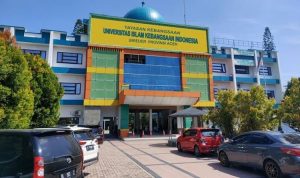
As part of the implementation of the Tri Dharma of Higher Education, particularly community service, the Universitas Islam Kebangsaan Indonesia (UNIKI) is committed to making a tangible contribution to addressing the challenges faced by the community.
Through an empowerment-based approach, UNIKI views that improving agricultural productivity does not rely solely on increasing crop yields, but also on strengthening farmers’ capacity to manage their farming enterprises in a professional and sustainable manner.
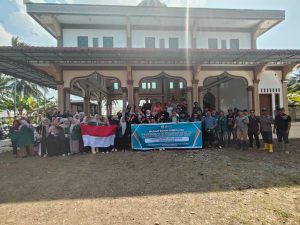
Therefore, the community service activities carried out by the team of lecturers from UNIKI Bireuen, one of whom is Dr. Mai Simahatie, S.E., M.M., in the village were directed toward guiding the “Berkah Rezeki” farmer group in Meunasah Krueng to implement Appropriate Technology (AT) that is aligned with local needs and conditions.
In addition, farm management was strengthened through training in financial record-keeping. This approach is expected to foster farmers’ self-reliance, improve production efficiency, and ultimately enhance the welfare of rural communities.
This community service activity has several main objectives. First, it aims to increase rice productivity through the application of simple, effective, and easily adoptable agricultural technologies. Second, it seeks to improve the efficiency of production processes, particularly during the harvesting and crop maintenance stages.
Third, it aims to strengthen farmers’ capacity in farm management through a structured and transparent financial record-keeping system. Fourth, it seeks to promote the establishment of sustainable collaboration between higher education institutions and rural communities.
In addition, the primary target of this activity is the Berkah Rezeki rice farmer group in Meunasah Krueng Village, Bireuen Regency. Moreover, the activity also involves UNIKI students as part of the implementation of the Merdeka Belajar–Kampus Merdeka (MBKM) policy, thereby providing dual benefits for both the community and the development of students’ competencies.
The implementation method of this community service program employs a participatory and educational approach. The UNIKI lecturer team not only acts as a provider of technology and training, but also serves as a partner that accompanies farmers throughout all stages of the activities.
The methods employed include initial observation, particularly in response to the suboptimal technical irrigation system supplying water to rice fields due to drainage damage. In addition, the activities comprise focused group discussions, technical training, field-based mentoring, and evaluation of the program outcomes.
Although the initial stage of the activities began with field observations to identify the main problems faced, particularly the suboptimal technical irrigation system supplying water to farmers’ rice fields, the observation results also revealed that most farmers still rely on manual harvesting tools.
In addition, farmers experience relatively high post-harvest losses due to the suboptimal technical irrigation system and the absence of an adequate financial record-keeping system. Based on these findings, the community service team designed interventions tailored to the farmers’ needs.

During the implementation phase, the community service team introduced and demonstrated the use of various appropriate technologies, including rice threshing machines (threshers), electric sprayers, and soil pH measurement tools.
In addition, farmers were provided with basic financial management training using Microsoft Excel, which was designed to be easily understood and applied in the context of small-scale farming enterprises. Assistance was carried out intensively throughout the program, involving UNIKI students in data collection, documentation, and technical assistance in the field.
The involvement of students is expected to strengthen the knowledge transfer process while fostering students’ social awareness and practical skills.
Regarding the application of Appropriate Technology in rice farming, one of the main outcomes of this community service activity is the increased efficiency of the harvesting process through the use of rice threshing machines (threshers).
Prior to the assistance program, farmers carried out rice threshing manually, a process that required considerable time and had the potential to cause yield losses.
However, with the use of threshing machines (threshers), harvesting time can be reduced by approximately 30 percent, while simultaneously minimizing grain losses.
In addition, the use of electric sprayers designed to atomize liquids such as pesticides has had a positive impact on crop maintenance processes. These tools enable more even and efficient application of pesticides and liquid fertilizers, while also reducing the physical burden on farmers. Consequently, labor productivity increases and the risk of fatigue can be minimized.
The utilization of soil pH measurement tools also represents an important innovation in this activity. By measuring soil pH, farmers are able to determine the appropriate type and dosage of fertilizers according to land conditions. This practice contributes to healthier plant growth and an overall increase in crop yields.
Another very important aspect is the strengthening of farm management. In addition to technical cultivation aspects, this activity also emphasizes the importance of sound farm management practices.
In addition, Microsoft Excel–based financial record-keeping training was provided to help farmers understand the financial flows of their farming enterprises, ranging from recording production costs to calculating profits and losses.
The results of the assistance program indicate that farmers have begun to recognize the importance of financial record-keeping as a basis for business decision-making. With structured financial data, farmers are able to plan their farming activities more carefully and with a sustainability-oriented perspective.
Farmers’ responses and participation in this program were highly positive. They perceived that the technologies and training provided were aligned with their needs and easy to apply in daily practice. Furthermore, direct field-based assistance enhanced farmers’ confidence in managing their farming enterprises.
One of the farmers stated that prior to the assistance program, they had never calculated the costs and returns of their farming activities in detail. After participating in the training, farmers gained a better understanding of the financial condition of their farming enterprises and experienced a significant increase in crop yields.
The involvement of UNIKI students in this community service activity represents a concrete implementation of the Merdeka Belajar–Kampus Merdeka (MBKM) policy. The students not only participated as learners but also served as facilitators who actively interacted with farmers. Through this activity, students gained contextual learning experiences that are relevant to their fields of study.
Moreover, students also strengthened the relationship between higher education institutions and the community, while fostering awareness of the importance of the role of academics in rural development. Consequently, this community service activity provided significant educational benefits for students as well as practical benefits for the community.
This community service program has important implications for the development of technology-based agriculture at the village level. The successful implementation of appropriate technology demonstrates that innovation does not have to be complex or expensive, but must be aligned with the needs and capabilities of its users.
In the future, the sustainability of this program is expected to be maintained through farmers’ commitment to continuously utilize the technologies that have been introduced, as well as through ongoing assistance from higher education institutions. In addition, this mentoring model can be replicated in other regions with similar characteristics.
The community service activities carried out by the UNIKI lecturer team in Meunasah Krueng Village, Peudada Subdistrict, Bireuen Regency, have proven to have a positive impact on increasing rice productivity and enhancing farmers’ capacity.
Through the application of appropriate technology and the strengthening of farm management, farmers were able to improve production efficiency, reduce yield losses, and manage their farming enterprises in a more professional manner.
The involvement of students within the MBKM framework at UNIKI Bireuen further strengthened the educational and social value of this activity. Overall, this program underscores the strategic role of higher education institutions as agents of change in agricultural development and the sustainable empowerment of rural communities.
Author:
Yusri, S.Sos., M.Si., M.S.
Lecturer in Economics and Business, UNIKI Bireuen
Tinggalkan Jejak dengan berkomentar
Belum ada komentar. jadilah yang pertama!